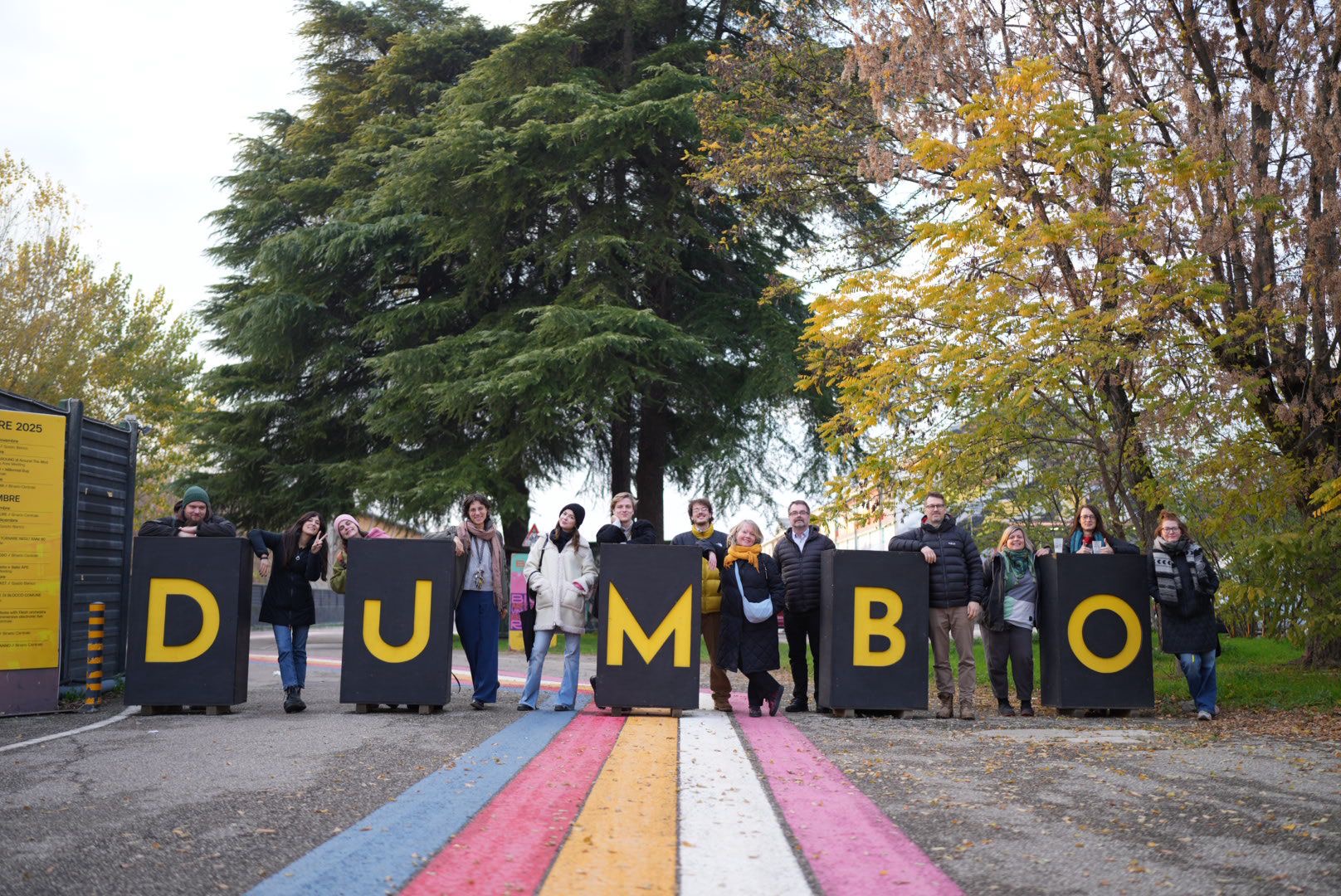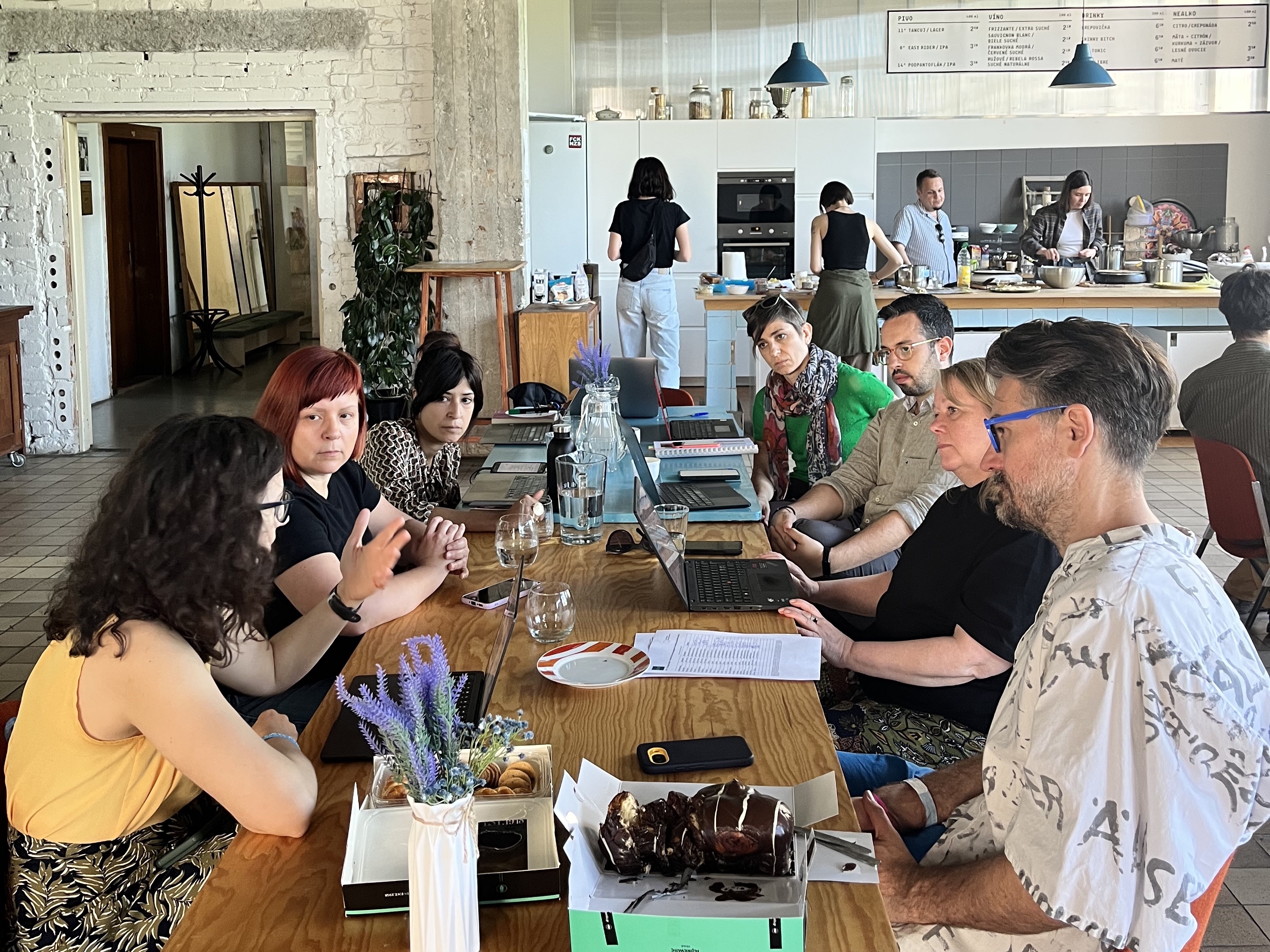
From 20 to 22 May 2026, Nova Cvernovka opened its doors for the third Training Hotspot of the Greening the Hubs project.
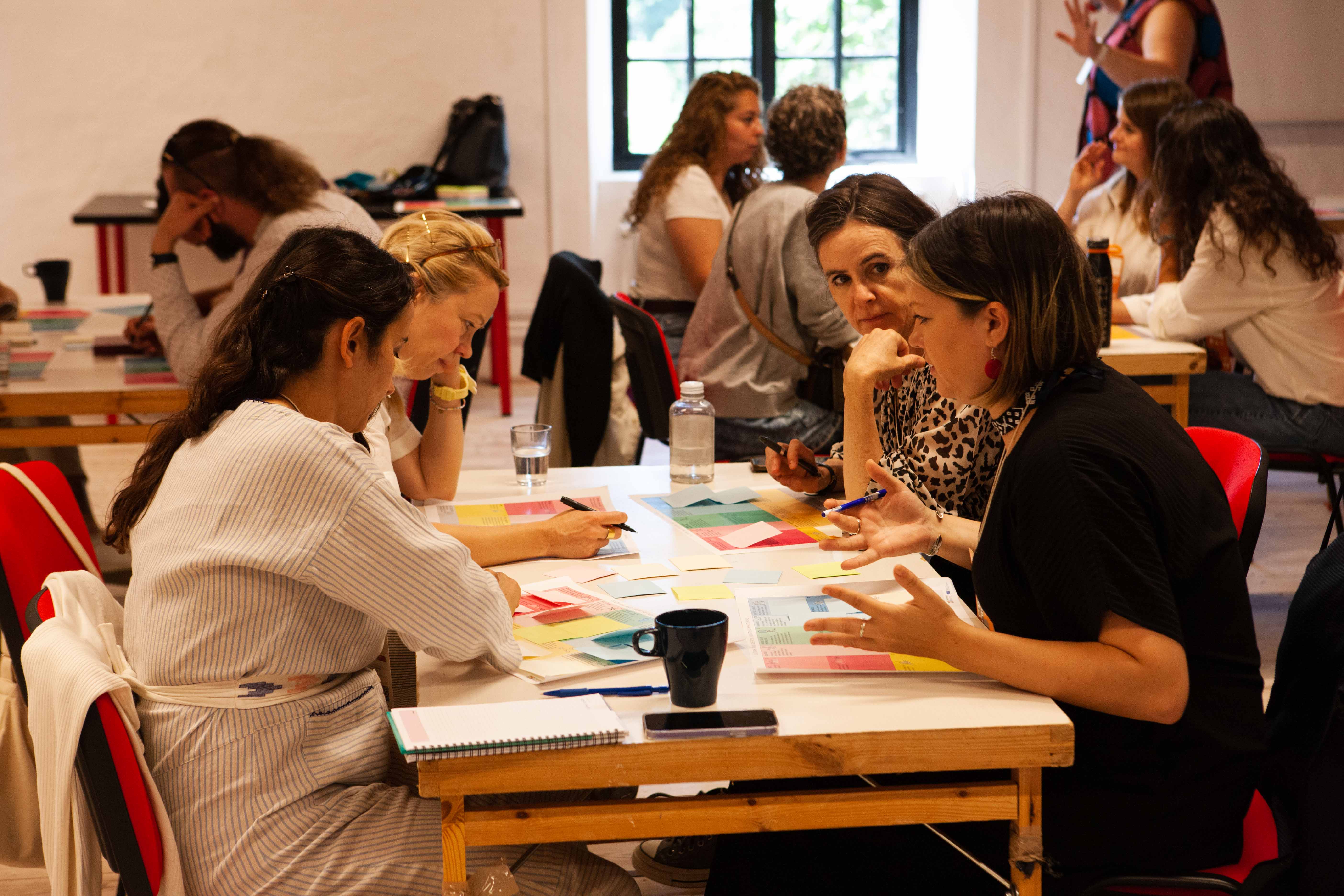
Bringing together European partners for an intensive programme, the event demonstrated how active community involvement serves as the foundation for lasting sustainable practices. Through presentations, site visits, and hands-on workshops, participants explored how creative and cultural hubs can build community-driven ecosystems within post-industrial spaces and urban environments.
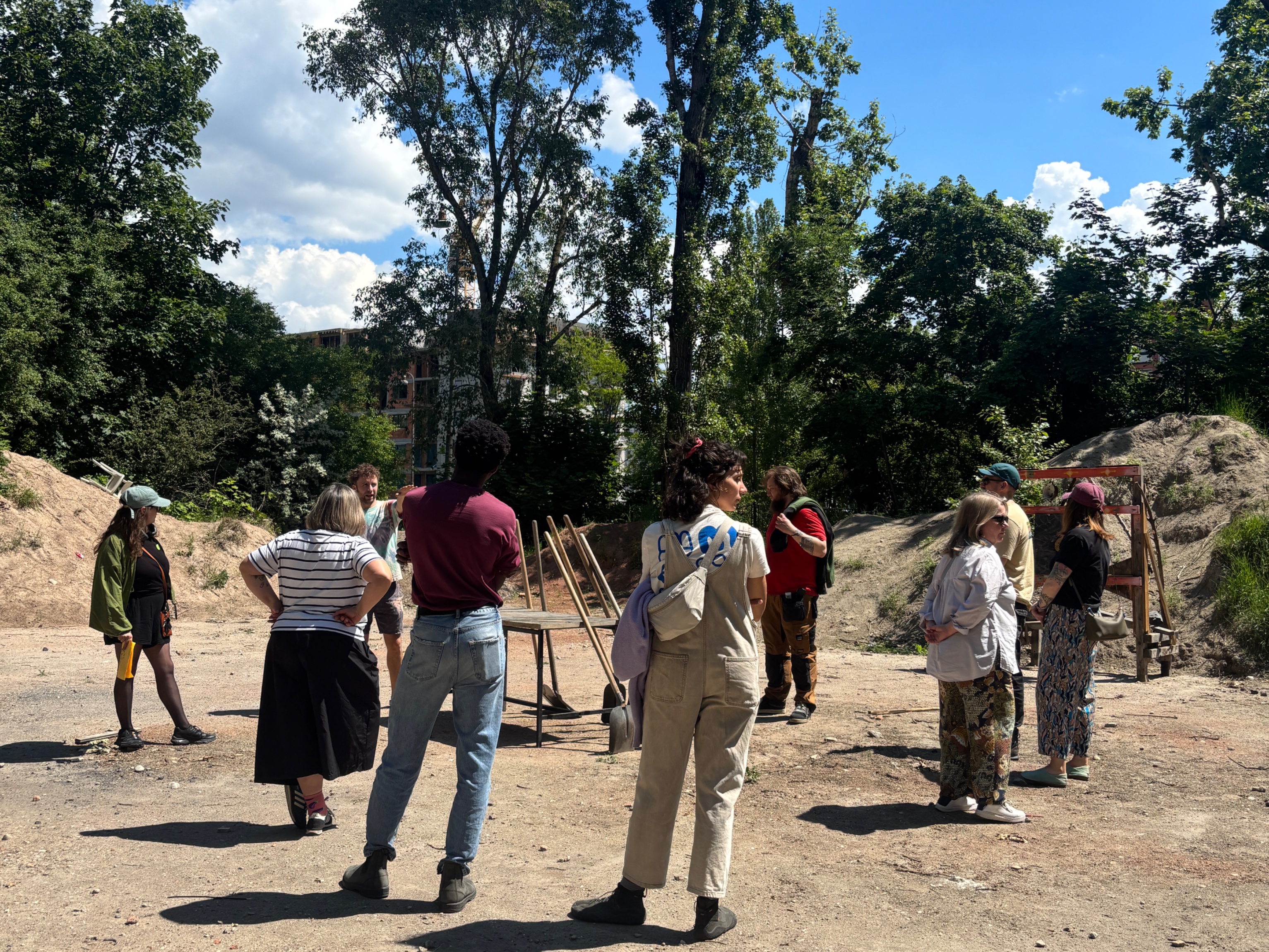
The event opened with an introduction to Nova Cvernovka's origins, led by Laco Oravec and Boris Meluš. They outlined the campus's history as a former chemical school and its evolution rooted in core values: freedom and diversity, collaboration and sustainability, and transparency. Participants then explored regenerative green innovations across the premises—including a water retention system, a flood meadow, and gravel-rubble pathways—alongside community initiatives like a compost, sauna, community garden, plant hub, and re-use center introduced by Michal Peržel.
A curated session dedicated to local good practices followed, highlighting the "Rubble to Park" (Suť na park) project. Architect Juraj Hariš, co-author of the initiative, illustrated how over 1,100 tons of construction waste were crushed, screened, and transformed into a water-permeable surface called "sutomlat". A new, fully functional public park is being built from this recycled material directly on site. The program seamlessly transitioned from theory to practice with a hands-on workshop during which participants were given the unique opportunity to physically experience the recycling process by mixing different sizes of rubble fractions themselves.
Participants then turned to broader urban environments with a visit to Nová Tržnica, a 1980s indoor iconic marketplace currently undergoing a rehabilitation of its original functions. After leading a guided tour of the building, cultural manager and urban activist Illah van Oijen gave a keynote presentation on the highly successful event "Good Market" (Dobrý trh). She discussed the event's impact on public space, community life, and its specific functioning within Nová Tržnica, which hosted last year's winter edition. A separate topic was their Zero Waste approach, which they have been dedicated to for a long time and within which they also train organizers of other events throughout Slovakia.
The circular economy was further explored through a tour of the vertical mushroom farm run by the DRŽ HUBU initiative. Originally rooted in Nova Cvernovka, this farm upcycles secondary local raw materials—such as wood sawdust and spent brewer's grain—into substrates for growing mushrooms. The organization also researches 100% biodegradable mycomaterials and promotes a "Grow It Yourself" (GIY) concept to educate the public on self-sufficient food production.
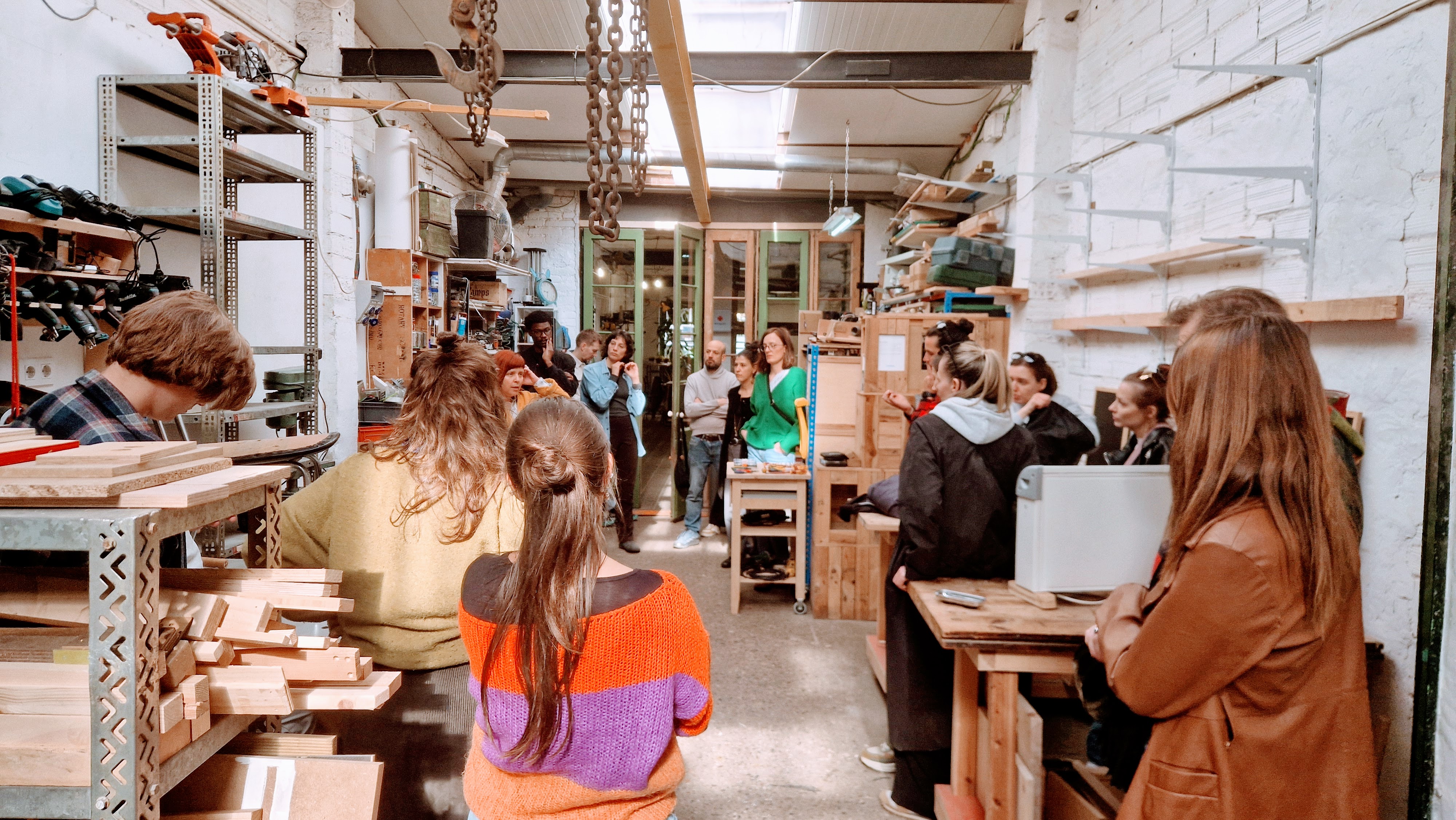
Alongside the presentations, attendees engaged in practical workshops designed to put theoretical concepts into practice. Working in small groups, participants sorted items in the Re-use Center with Viera Zelcamova, upcycled wooden pallets into a seating bench in the Community Garden with Michal Peržel, sifted soil in the Composting area, and restored a children's wooden playhouse with Jana Solčianska. All these activities confirmed that shared manual labor and sharing a space serve as excellent tools for strengthening the community.
The programme also featured a Networking Café, an informal gathering designed as a lightly facilitated communal outdoor dinner in the park of Nova Cvernovka. By choosing food as the main medium of connection, participants and local guests actively took part in preparing the dinner together. This setup of social and spatial conditions created a warm, trust-building environment where specific new partnerships and friendships formed naturally. The communal spirit continued on the final day with a Pancake Breakfast hosted by Nová Cvernovka’s residents, providing a relaxed setting for feedback and evaluation.
To sum up, the Training Hotspot successfully wove together theoretical background, active experimentation, and local site visits. The exchange demonstrated that sustainability in cultural hubs requires both structural innovation and community-driven practices, leaving participants inspired and better equipped to integrate transferable solutions into their own ecosystems across Europe.