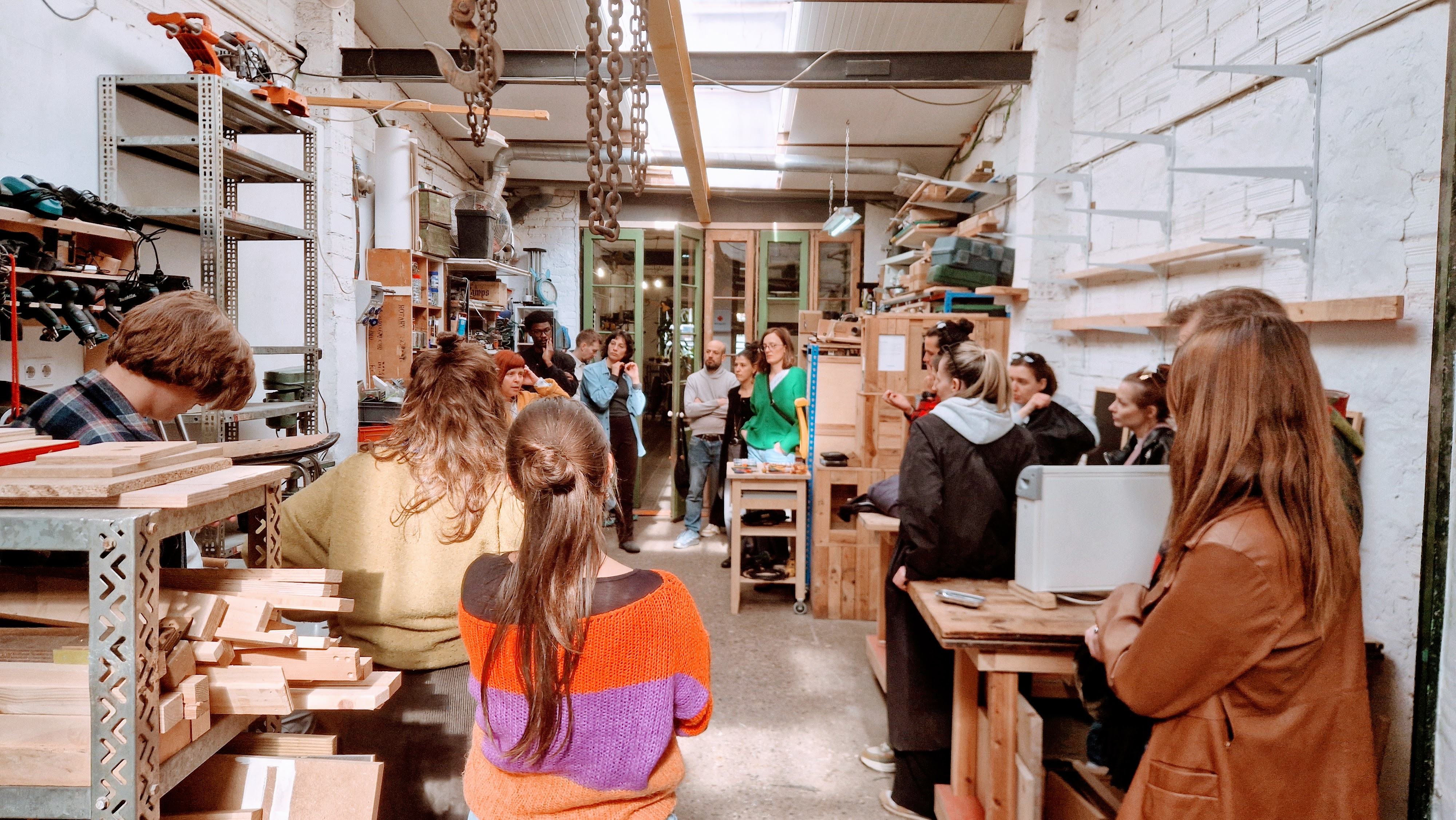
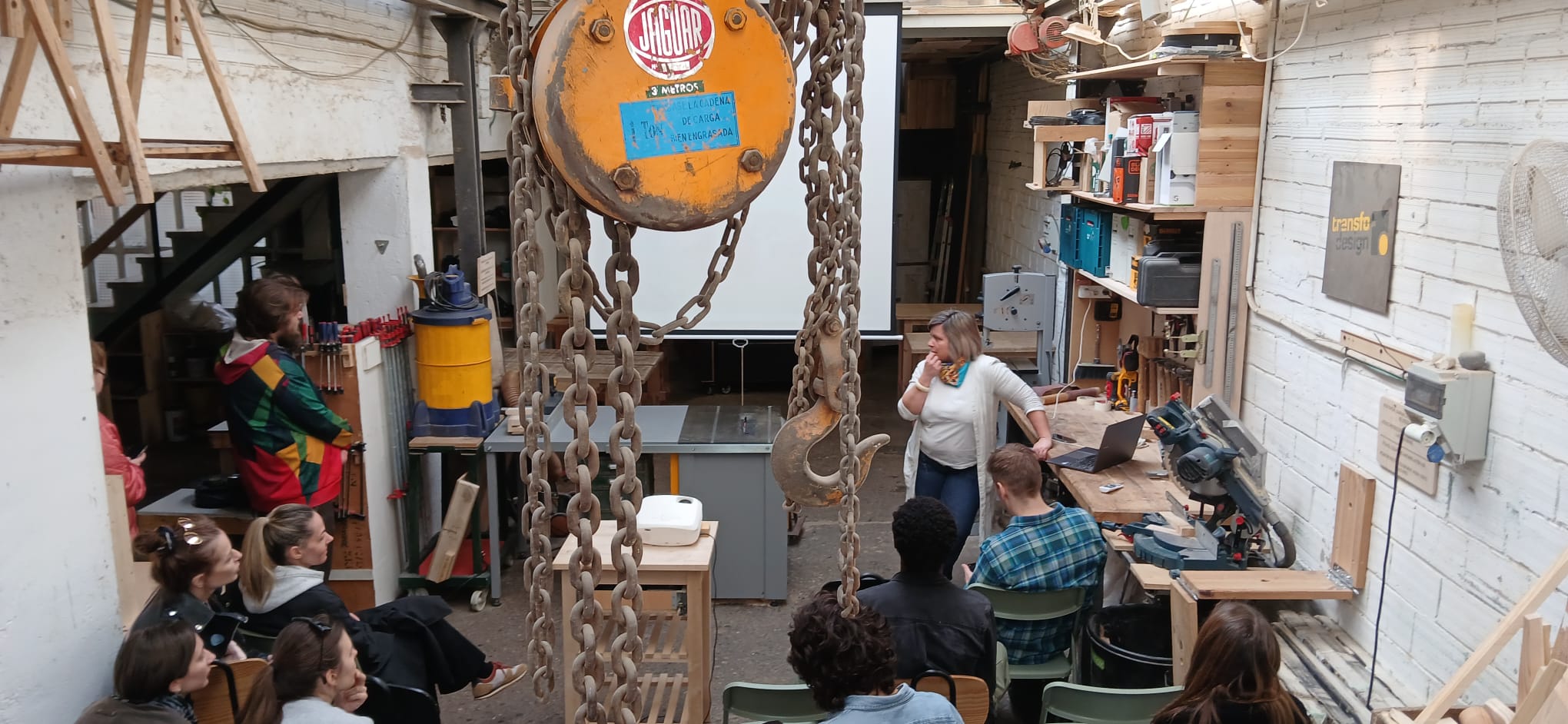
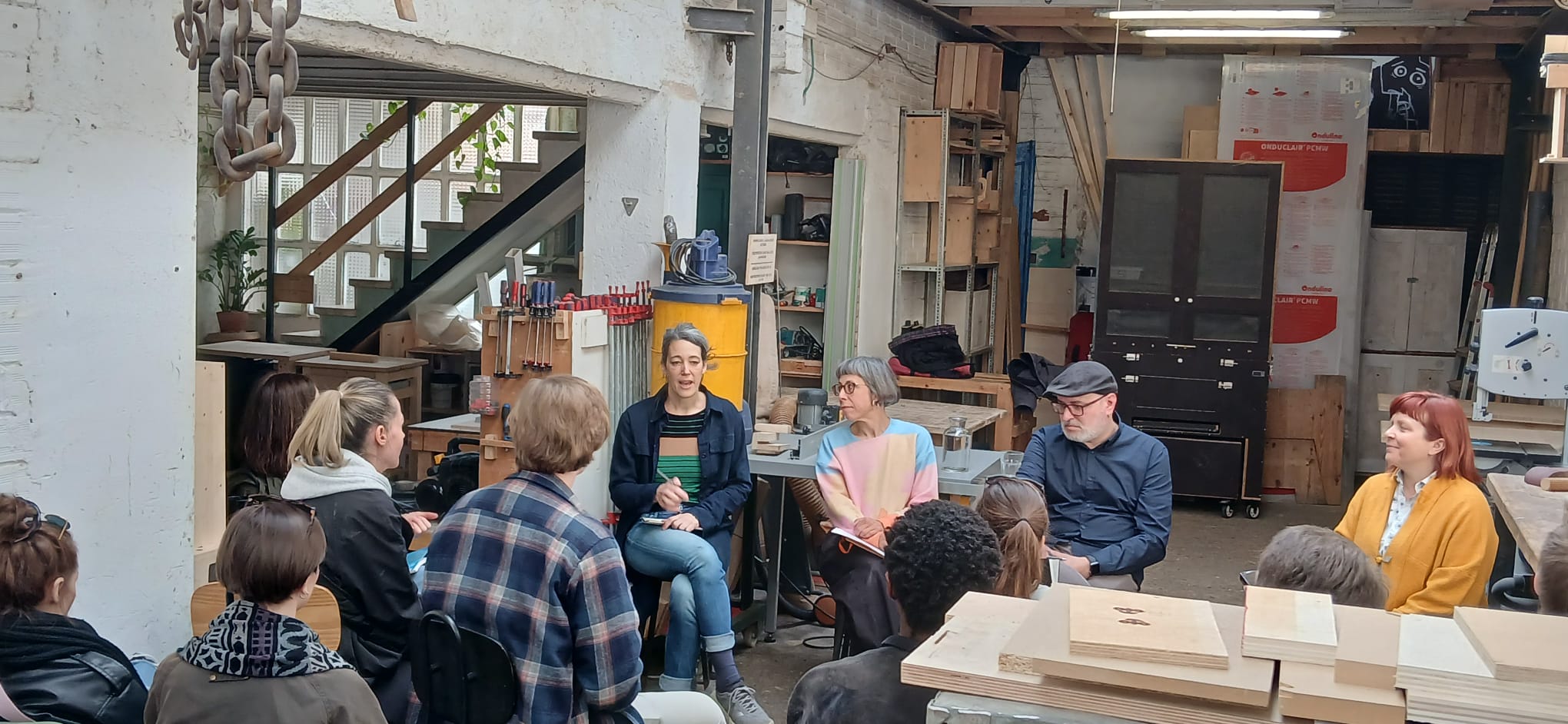
A key moment of the first day was the panel discussion “From Space to Community: Engage through Circularity”, featuring the organisations Makea Tu Vida, Back to Eco, and Maker Convent. The discussion explored how circular practices can foster community engagement, social inclusion, and collaborative learning through design and material-based activities.
The theoretical input was complemented by a hands-on Repair Café workshop, where participants worked in groups to diagnose and repair everyday objects while learning how to organise similar initiatives. This practical session translated circular concepts into tangible skills and demonstrated how repair culture can be implemented as a community-driven activity within cultural hubs.
The second day focused on immersion in Barcelona’s local ecosystem, with visits to a range of initiatives applying circular principles in practice. Participants explored community-led, decentralised, and institutional approaches through visits to Jardín de las Mariposas Trullàs, AKASHA Hub, and Ateneu de Fabricació La Fàbrica del Sol. These visits highlighted diverse governance models, collaborative practices, and approaches to material reuse.
The group also visited the Matter Matters: Designing with the World exhibition at Disseny Hub Barcelona, which examines the relationship between design, material resources, and environmental challenges. The exhibition provided a critical perspective on resource scarcity and reinforced the importance of responsible material choices within contemporary design practices.
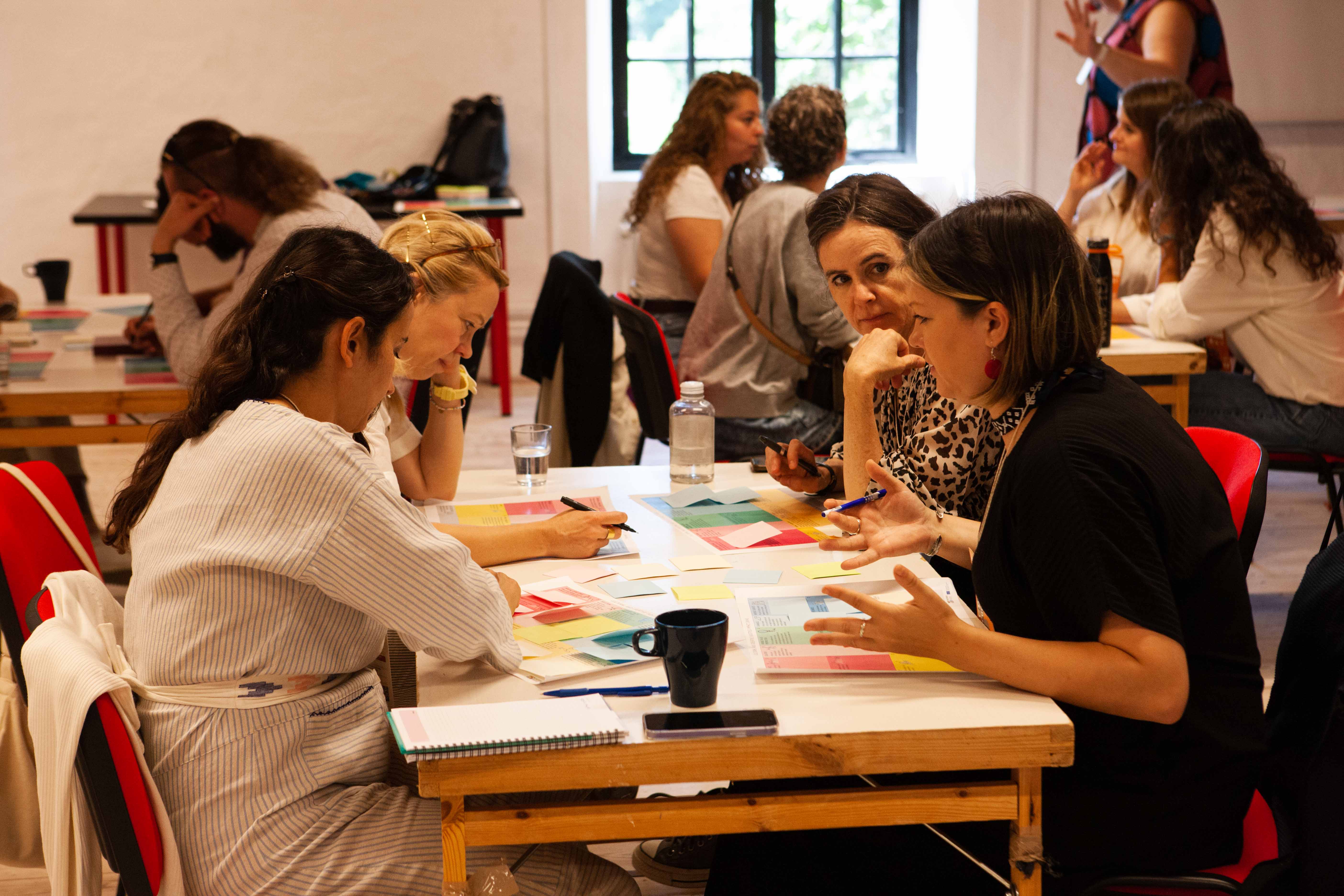
The final day was dedicated to evaluation and reflection, allowing participants to assess the programme and identify how the knowledge gained could be applied in their own contexts. Through structured feedback sessions, participants highlighted key learnings, valuable connections, and potential actions to implement within their organisations.
A Networking Café complemented this process by bringing together local stakeholders from Barcelona’s circular ecosystem, including representatives from FabLabs, universities, and sustainability initiatives. Through guided discussions, participants explored material use, tools, and circular problem-solving, fostering cross-sector dialogue and generating ideas for future collaborations.
The Barcelona Training Hotspot demonstrated the value of combining experiential learning with real-world engagement. By connecting theory with practice and strengthening networks among participants and local actors, the event contributed to the development of more sustainable and resilient cultural hubs across Europe.