Battle on many fronts - sustainability work at Flow Festival and KAAPELI
Research

Battle on many fronts - sustainability work at Flow Festival and KAAPELI


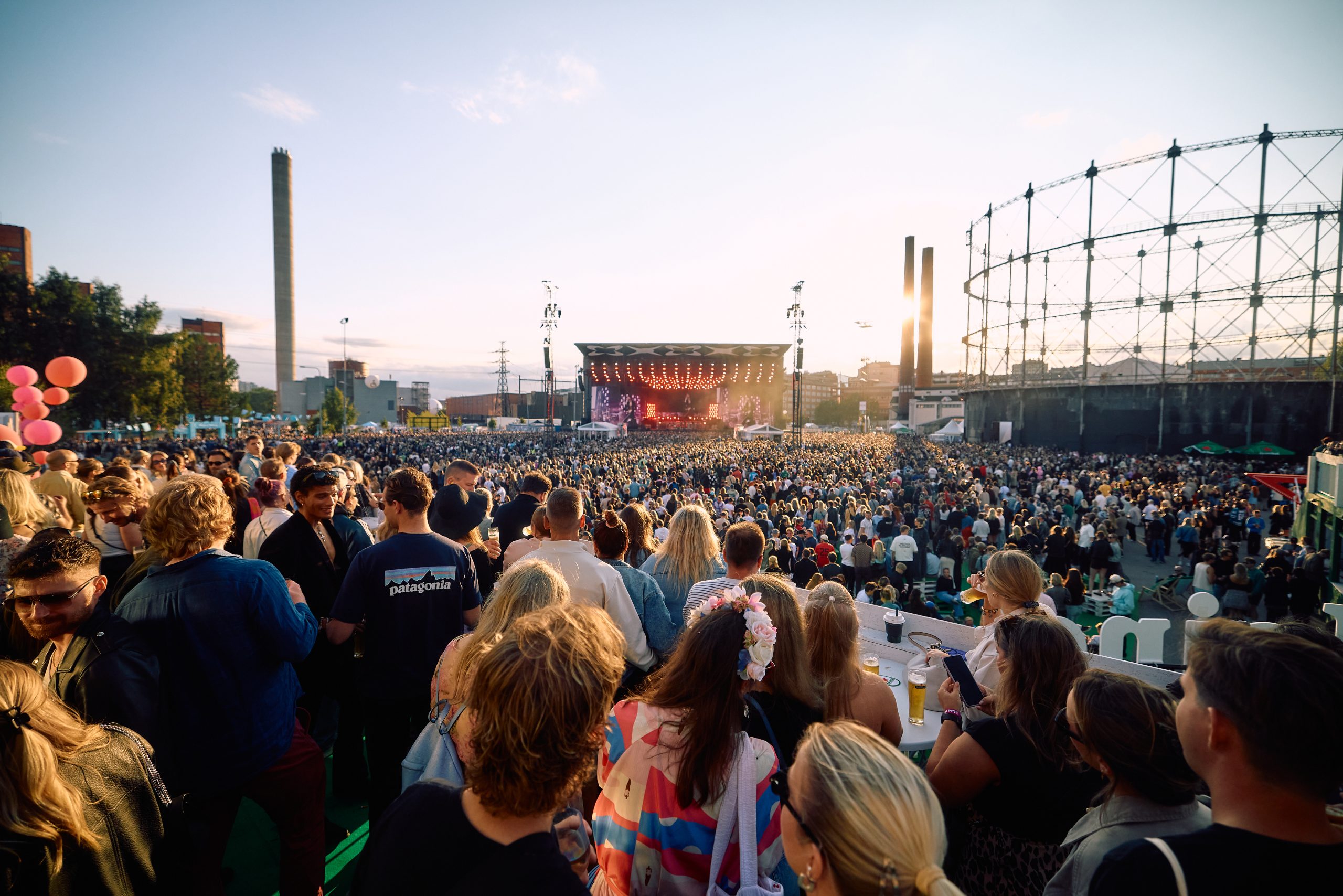
Flow Festival takes place at Suvilahti in Helsinki, a former power plant and gasworks managed by KAAPELI. The historic industrial site is home to cultural organisations, artists and major events. For KAAPELI, sustainability includes keeping these buildings in use and preserving their cultural significance. Flow brings its own sustainability commitments and production practices to this setting.


17 November 2026
Trust is one of KAAPELI’s values

KAAPELI has committed to the Finnish EcoCompass environmental management system as part of its sustainability strategy. It has also been developing its practices through two European projects dedicated to sustainability in cultural centres: Rebuilding to Last in 2022–2024 and Greening the Hubs since 2025.

As a provider of event spaces, KAAPELI generally encourages and guides organisers rather than setting detailed sustainability requirements and monitoring compliance. The company trusts its tenants, many of whom already incorporate environmental responsibility into their everyday work.

There is also room to improve the venue’s own practices. In her master’s thesis, event sales manager Katja Valpas explored how to improve waste management at Merikaapelihalli, one of KAAPELI’s event spaces, and engage stakeholders in developing and adopting more sustainable practices.

At Suvilahti, Flow has long been at the forefront of sustainability work in the festival sector, setting an example that KAAPELI and other event organisers can learn from.

Flow: using data to guide decisions

Established in 2004 and held at Suvilahti since 2007, Flow integrates ecological, social and economic sustainability into its operations. Stiina Väänänen, Production Manager responsible for the festival area, operations and services, describes its approach: “We budget for natural resources and emissions in the same way we budget for money.”

Flow has measured its carbon footprint since 2009. Following the launch of the Flow Impacts research project in 2021, it introduced an in-house calculation and budgeting tool in 2022. This measures both greenhouse gas emissions and natural resource consumption. The material footprint also helps assess the success of its circular economy efforts.

In 2025, food and beverages, logistics and technical production were the largest contributors to emissions and resource consumption in the festival’s production. Flow’s goal is to reach a 1.5°C lifestyle level by 2033, requiring emissions and material consumption to fall to nearly half their current levels. Measuring both gives the production team concrete information to support its decisions.

Sustainability in practice

More than 85% of the food offered by Flow’s over 40 food vendors is vegetarian or vegan. Red meat and poultry have not been served since 2022, and the long-term goal is a fully vegan festival.

Drinks are served in deposit-bearing cans and bottles or reusable, washable cups. Waste is sorted into more than ten categories. Energy provision combines renewable biofuels with emission-free grid electricity, with plans to move towards battery-powered generators.

Social responsibility includes non-discrimination, safer-space principles, designated anti-harassment contacts and accessibility work with experts. Through its Keychange pledge, Flow is committed to ensuring that at least half of its performers are not men. Ticket donations and community projects, including cooperation with Startup Refugees, extend this work beyond the festival grounds.

As an employer and partner, Flow maintains transparent pay structures and prioritises suppliers from the Helsinki area, supporting the local economy.

Challenges and lessons

Finland’s location means long transport distances for international artists and equipment. These remain a challenge even when sustainability is considered throughout production. Measurement makes the sources of impact visible, but reductions depend on practical changes.

Flow publishes its environmental performance on its website and plans to expand this into comprehensive sustainability reporting, including more detailed social sustainability metrics.

For cultural centres, this example shows that the venue and the organiser can contribute in different ways. KAAPELI’s role centres on maintaining and developing a historic site for continued cultural use. Flow’s role centres on the decisions involved in producing its festival.

The relationship also raises a useful question for future development: what can a venue learn from the sustainability practices of the events it hosts, and how could those lessons improve the conditions it offers other organisers? At Suvilahti, that is an opportunity to explore further.

Image courtesy © Flow festival, Samuli Pentti

Related activities

Helsinki: Exploring Energy Efficiency and Sustainable Cultural Practices
Training

Helsinki: Exploring Energy Efficiency and Sustainable Cultural Practices


30 September 2026

Connect with us
Subscribe to our newsletter